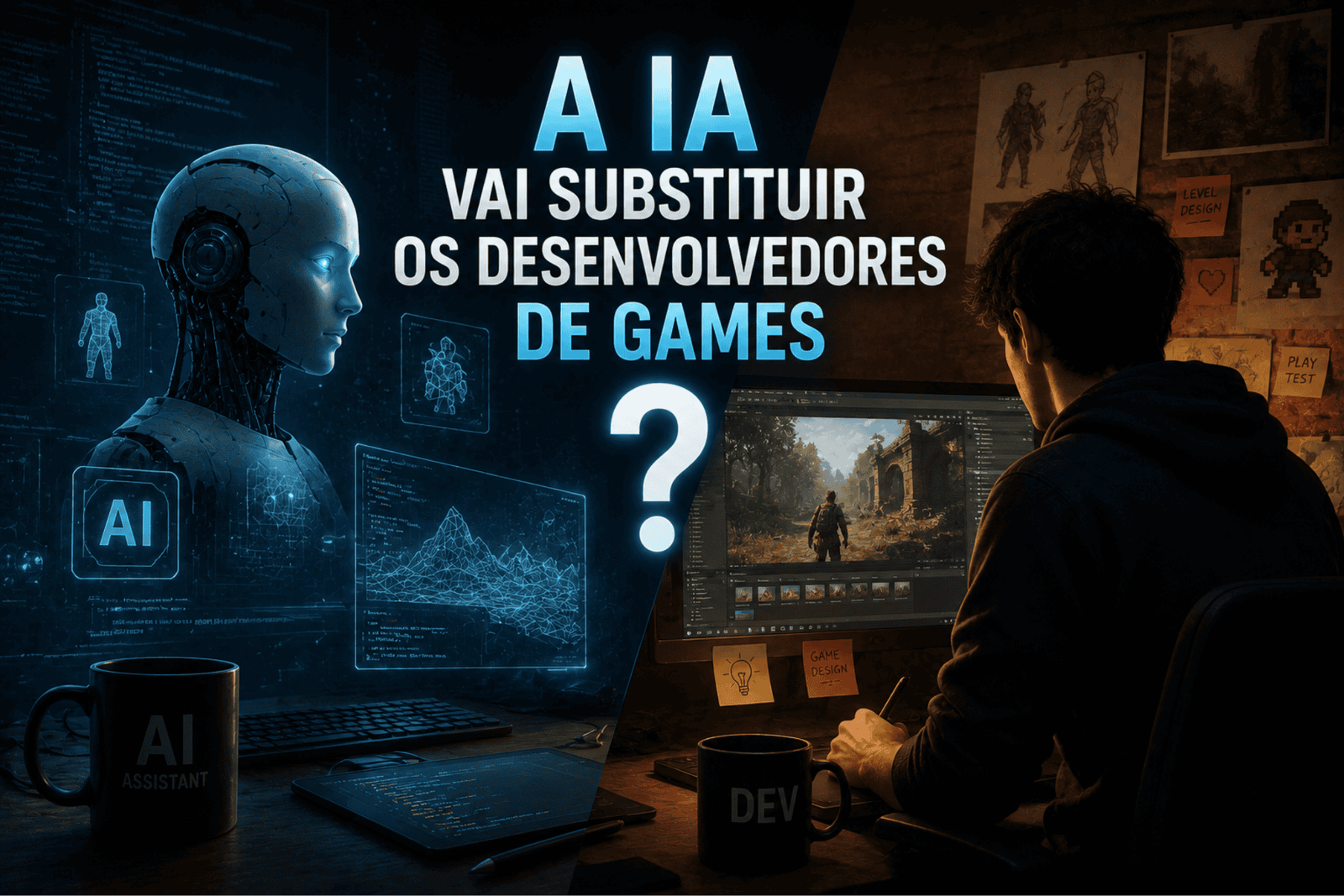
At Gamescom Latam, moderator Rodrigo “Chips” led a panel on artificial intelligence in games and concluded that AI’s integration into game development is inevitable—but whether it replaces developers remains doubtful.
Where AI is already used in game production
The most visible impact of AI has been on art: what once took concept artists weeks can now be generated in seconds. These AI-produced concept images typically serve as references for human artists rather than final assets, accelerating early stages of visual design.
Beyond visuals, AI is used for prototyping and early-stage validation of ideas. Rodrigo notes that techniques referred to as “Vibe Coding” let creators reproduce the feel of existing games—he cites Minecraft as an example—by describing the desired behavior in natural language while AI generates the code or algorithms.
AI replaces tasks, not necessarily people
Development tasks remain: characters still need to move, behave and interact; enemies must be designed; core game concepts must be invented. Even when AI produces initial outputs, a developer must coordinate one or more AIs, refine the results and complete the work.
Risk of market saturation
A larger threat than outright job replacement may be the massification of game releases. Rodrigo points to SteamDB data showing 21,406 games launched on Steam in 2025, part of an annual growth trend dating to 2014 (with 2019 as the only dip).
With AI lowering production barriers, digital storefronts risk being flooded with low-quality “shovelware”—large volumes of cheaply produced titles—that can bury higher-quality games unless those games receive substantial marketing to stand out.
Employment effects beyond the game industry
AI’s influence on employment is already visible across tech. Rodrigo highlights recent layoffs at several large companies: Meta reduced its workforce by 8,000; Epic cut about 1,000 employees; and Microsoft, together with XBOX, laid off 4,800 staff. He notes that in Microsoft’s case the layoffs resulted from a combination of restructuring, studio sales, shifts in investment focus, reductions in management layers, and the disruptive presence of AI as a catalyzing factor.
Rodrigo adds that similar disruptions have occurred in other creative industries—music, writing, film and painting—and that AI accelerating workforce changes in games was foreseeable.
Which developers will thrive?
Rodrigo argues the future will likely favor developers who can work effectively with AI. He places the realistic stance between two extremes: those who view AI as an existential threat and those who see it as a magical fix. AI’s presence in games is no longer a question; what remains unsettled is how people will use it.
He emphasizes that memorable games combine engaging mechanics with human-driven storytelling and expression. Whether AI can replicate mechanics or invent novel ones, the enduring impact of a game often stems from its human elements—narrative, emotion and design decisions that resonate with players.
Possible outcomes for the industry
According to the panel’s discussions, AI could democratize game creation, boost productivity and enable new experiences. Conversely, it could also contribute to a saturated, impersonal market. Ultimately, Rodrigo concludes, the consequences of AI will depend more on the people and decisions behind the technology than on the technology itself.