The Witcher 3 Remastered released on September 29, 2026, and is available at no additional cost to owners of the original game, including those who purchased the prior Switch version; the Hearts of Stone and Blood and Wine expansions are bundled. The remaster brings updated lighting with Path Tracing on PC, a dynamic camera, a redesigned skill tree, mod support, transmog, and a suite of accessibility options — but many of the core combat systems remain rooted in the original design.
Price, platforms and upcoming expansion
The remaster launched for PS5, Xbox Series, Switch 2 and PC on September 29, 2026. Players who already own The Witcher 3 receive the update free, and the two paid DLCs, Hearts of Stone and Blood and Wine, are included without extra cost for existing owners. A paid expansion, Songs of the Past, is scheduled for 2027 on PC, PS5, Xbox Series and Switch 2.
Graphics: global illumination, mods and visual trade-offs
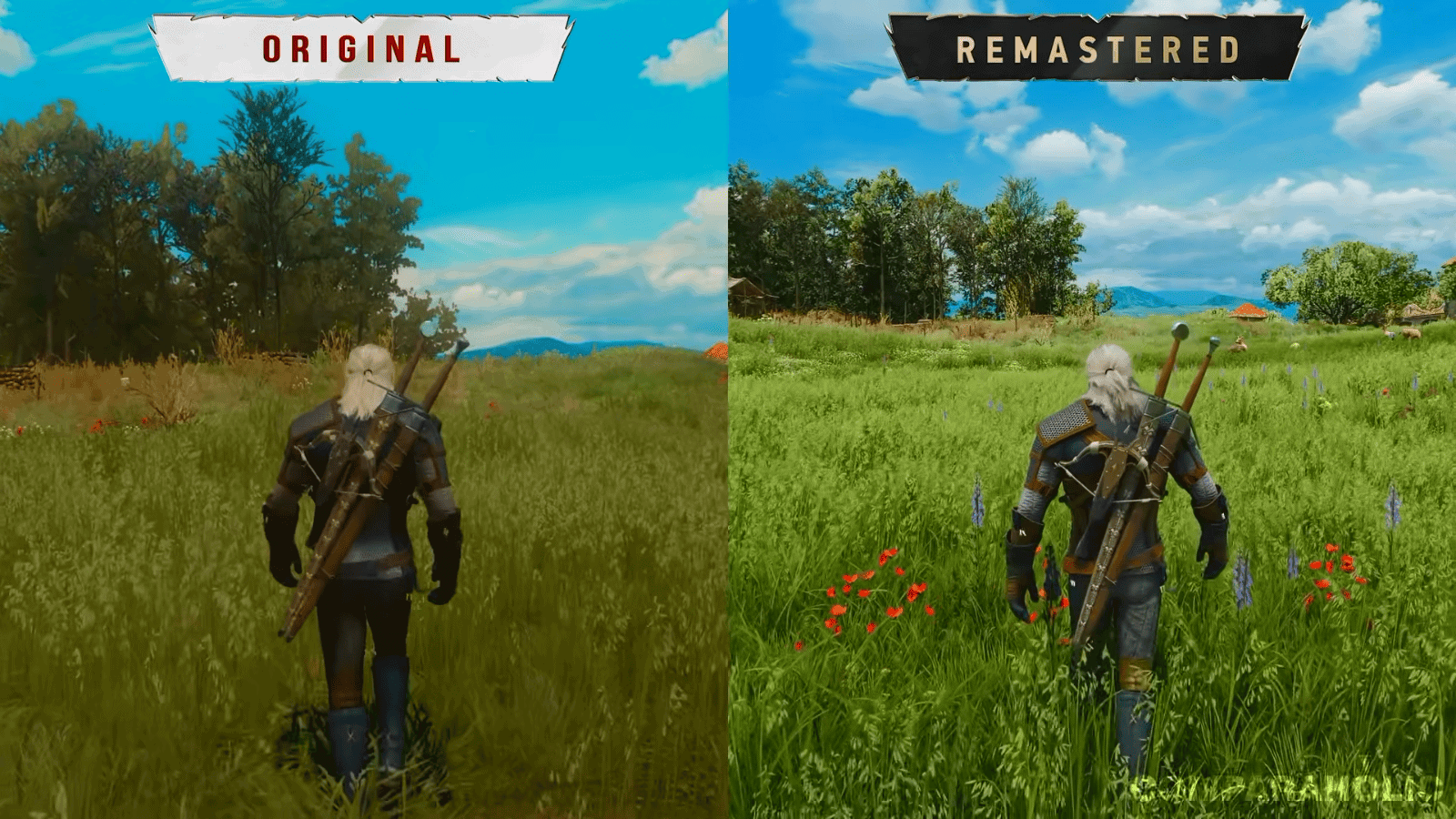
The remaster introduces a new global illumination system with Path Tracing and Ray Reconstruction that affects hair, water reflections and volumetric effects across the full day-night cycle. HDR handling, ultrawide support (21:9 and 32:9) and new options for hair, shadow and upscaling were added, while players can still choose the original look.
Included across all platforms is the HD Rework created by modder Halk Hogan, which refreshes textures, character and monster models, vegetation and environmental detail. Foliage shading was improved and open areas gained denser flora and increased view distances.
Character and monster details received upgrades: Geralt shows more scars and facial detail, armor and surface materials have richer shading, NPC faces were enhanced, and monsters were visually updated (for example, drowners now show iridescent skin). Spell effects and perk activations add visual flairs like weapon glows and auras.
However, platform-specific issues persist. Console models can appear plasticky under direct light, and the PS5 Ray Tracing mode can produce an oddly saturated orange sunset. On PC some areas can look washed out unless bloom is adjusted; dark areas have shown purple wall glows (noted at Kaer Morhen) and Geralt’s hair has sometimes appeared black. A post-launch patch addressed some brightness problems.
Performance across systems
On PC the most demanding feature is Path Tracing, which requires a powerful GPU and active upscaling. In one test system (Ryzen 5 5600, RTX 5060 Ti 8GB, 32GB RAM) running 1080p with DLSS and Frame Generation, frame rates stayed between roughly 145–170 fps over nearly twelve hours without major hitching. High-end laptops with RTX 4080 also ran smoothly on Ultra.
Other reviews reported significant issues with ray tracing enabled: severe hitching entering Novigrad, difficulty sustaining 60 fps at 4K, and visible noise at 1440p on 4K displays. Small stutters continue to occur but are much improved with ray tracing disabled.
Handheld and portable PC devices benefit from prior next-gen configurations. On the ROG Ally X, raising environment and detail from low to medium maintained stable fps without rapid battery drain; pushing higher suggests using external power.
The PS5 base offers two modes: Performance (recommended), targeting 60 fps at 4K, and Ray Tracing, which runs at 30 fps and omits some visual upgrades and Path Tracing. On PS5 Pro Ray Tracing can run at 60 fps and Performance reaches about 90 fps with a compatible 120Hz VRR TV and Sony’s PSSR upscaling. Players may see fps drops at mission ends, during autosave, and in heavier action; an autosave hitch from the Complete Edition remains unpatched.
On Switch 2 the game runs between 30–40 fps, about 720p in handheld and 1080p docked, both with variable refresh. Performance is steadier than the original Switch release, with fewer texture pop-ins and no dramatic fps collapses. Load times improved but can still exceed 30 seconds between Novigrad and Skellige. Minor UI input lag (roughly one second) when opening the map or save menu and occasional lighting stutters remain; Geralt’s hair appears softer and more aliased due to DLSS behavior.
Gameplay changes: camera, combat feel and skill tree
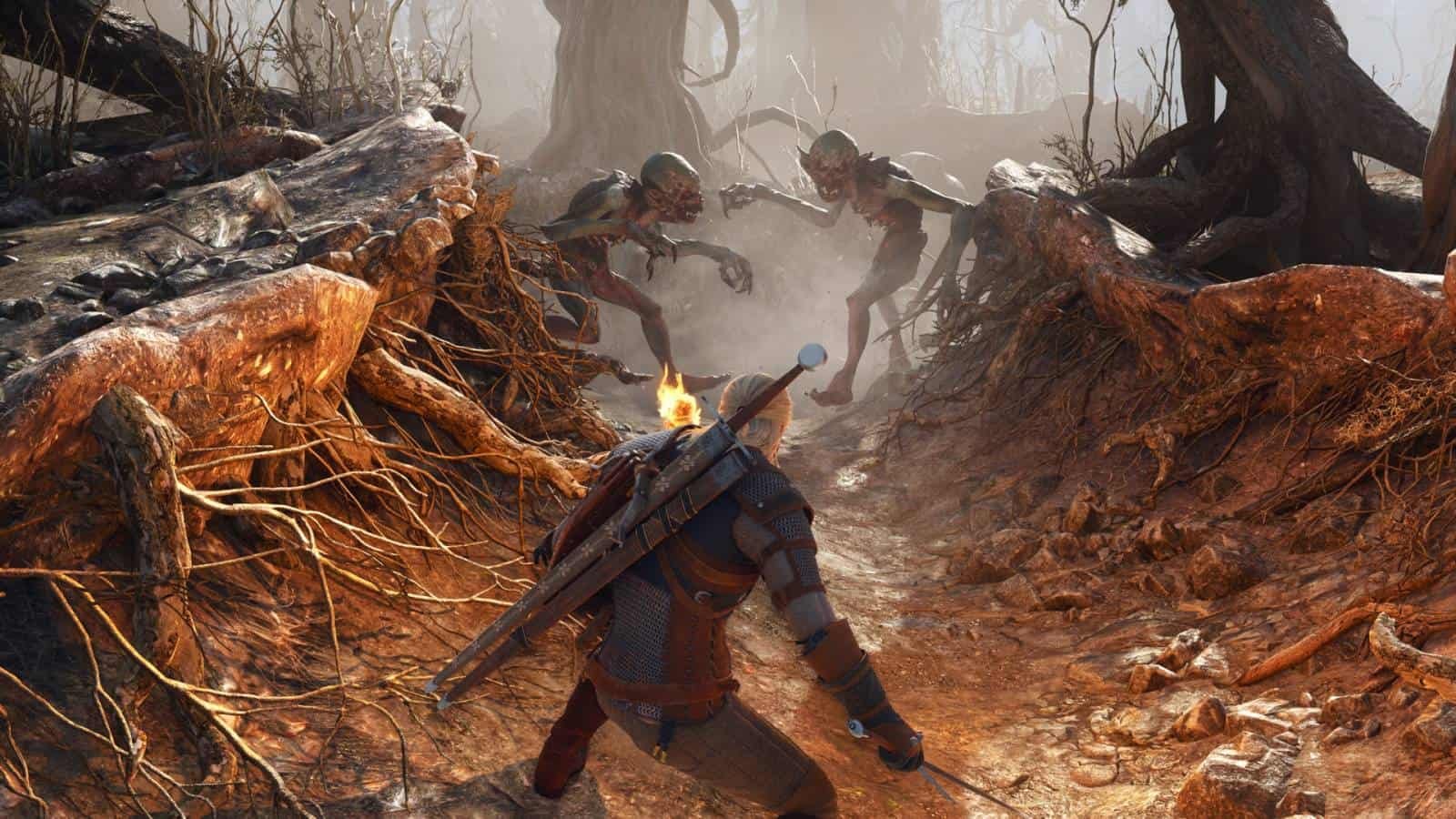
The camera is now dynamic: it pulls back for encounters with multiple enemies, tightens during duels and follows Geralt more consistently during rolls. Combat feels faster and heavier overall, with snappier steps, quicker thrusts, expanded animation variety for Geralt and monsters, new finishers and improved lock-on behavior. The crossbow received generous headshot damage multipliers and a new ability that can instantly kill a shooter with a perfect parry. Options allow “quick” signs that skip animations, guided finishers, and textual damage logging that can be toggled; most of these new gameplay features can be reverted.
Enemy AI was adjusted so foes coordinate attacks and attempt to stay grouped; wolves no longer circle to drag fights. On higher difficulties simple attack-spamming is less effective.
Controls feel more responsive: Geralt no longer adds stray steps after releasing the analogue stick, climbing is smoother, and the Carpeado horse behaves more reliably (less snagging on branches, better gallop response and the ability to loot while mounted).
The skill tree was redesigned into a visual layout with three tiers per ability, where each tier requires the previous one and abilities unlock faster. Players’ skill points were reset for returning saves. New school-based abilities were added for Viper, Manticore and Griffin, and the Blood and Wine mutagen system is available from the start. The 12 active-slot limit remains, but new synergies make early specialization more viable. Sign and alchemy skills can now increase sword damage and vice versa.
Interface, cross-save and platform-specific controls
The user interface received several updates: the character menu now features a top bar, faster navigation and clearer notifications; equipment screens are more visual though some descriptive text retains its older formatting. Quest tracking was simplified, allowing easier swapping of the tracked mission and reducing on-map clutter by default. The map screen continues to display all indicators. Meditating now advances the in-game time visibly instead of using a UI-only screen. Witcher Senses are visually clearer but require precision to target effectively. The photo mode expanded, though NPC placement limits make some shots tricky. Cross-save is supported via the developer’s account system, enabling progress transfer between platforms. Quest content and progression remain unchanged.
On Switch 2 the right Joy-Con can act like a mouse: rotating it casts signs and the gyroscope assists aiming; the touchscreen supports map and menu navigation.
Unresolved issues and remaining flaws
Despite many improvements, core issues persist. Combat retains a roll-focused structure with a sometimes floaty, repetitive feel; group targeting can remain awkward and dodging still feels sluggish. Geralt occasionally slides toward enemies and exhibits additional inertia when turning. Keyboard-and-mouse modernized combat can feel unusual and takes time to adapt, though controller play is smoother. The revised skill tree does not fully overcome perceived rigidity because most options still emphasize combat. The Carpeado can still collide with invisible barriers and struggle with fences, and some facial animations appear older than the upgraded environments.
Mods, transmog and accessibility features
A mods menu was added to the main menu, integrated with mod.io so community creators can publish mods; on PS5 the catalog is curated by the developer. This is the first time official mod support arrives on consoles, and at launch the catalog is mainly cosmetic with limited gameplay-altering entries.
Transmog (called Reforge in-game) swaps the appearance of armor and weapons without changing stats. Only specific craftsmen—Yoana for armor and Hattori for weapons—offer the service, and they must be unlocked through their associated campaign missions. New appearances unlock when the item or its diagram is in the player’s inventory.
Accessibility received a dedicated menu section that includes a preset called Bard’s Ballad aimed at reducing player fatigue. Options include infinite underwater breath, non-degrading equipment, faster and indestructible boats, configurable health regeneration, toggleable Witcher Senses, ignoring carry weight, and standard subtitle, interface and HUD adjustments.
Bugs, patches and platform-specific reports
The remaster launched with numerous bugs; many were addressed in patch 5.01 released October 8 for PC, PS5 and Xbox Series. Some issues reported at launch were not listed among the 5.01 fixes and may persist.
Reported problems included enemies stuck in death-loop animations (often after Aard), incorrect over-encumbrance warnings, the Carpeado teleporting Geralt off cliffs when dismounting, a traversable wall in an early room, progression blockers requiring save reloads, and at least one full crash. A PC review noted ultrawide issues: the HUD could not be repositioned, 32:9 displays showed 16:9 bars centered, borderless window mode produced right-edge artifacts, HDR global brightness was unadjustable, and menus crashed when attempting to stretch dialogue screens. Switch 2 reviews noted heavy bloom causing Geralt’s white hair to look blond and sparse crowd population in cities like Novigrad. The developer is monitoring reports and preparing a Switch 2 update to improve image sharpness.
Verdict: who should revisit Velen?
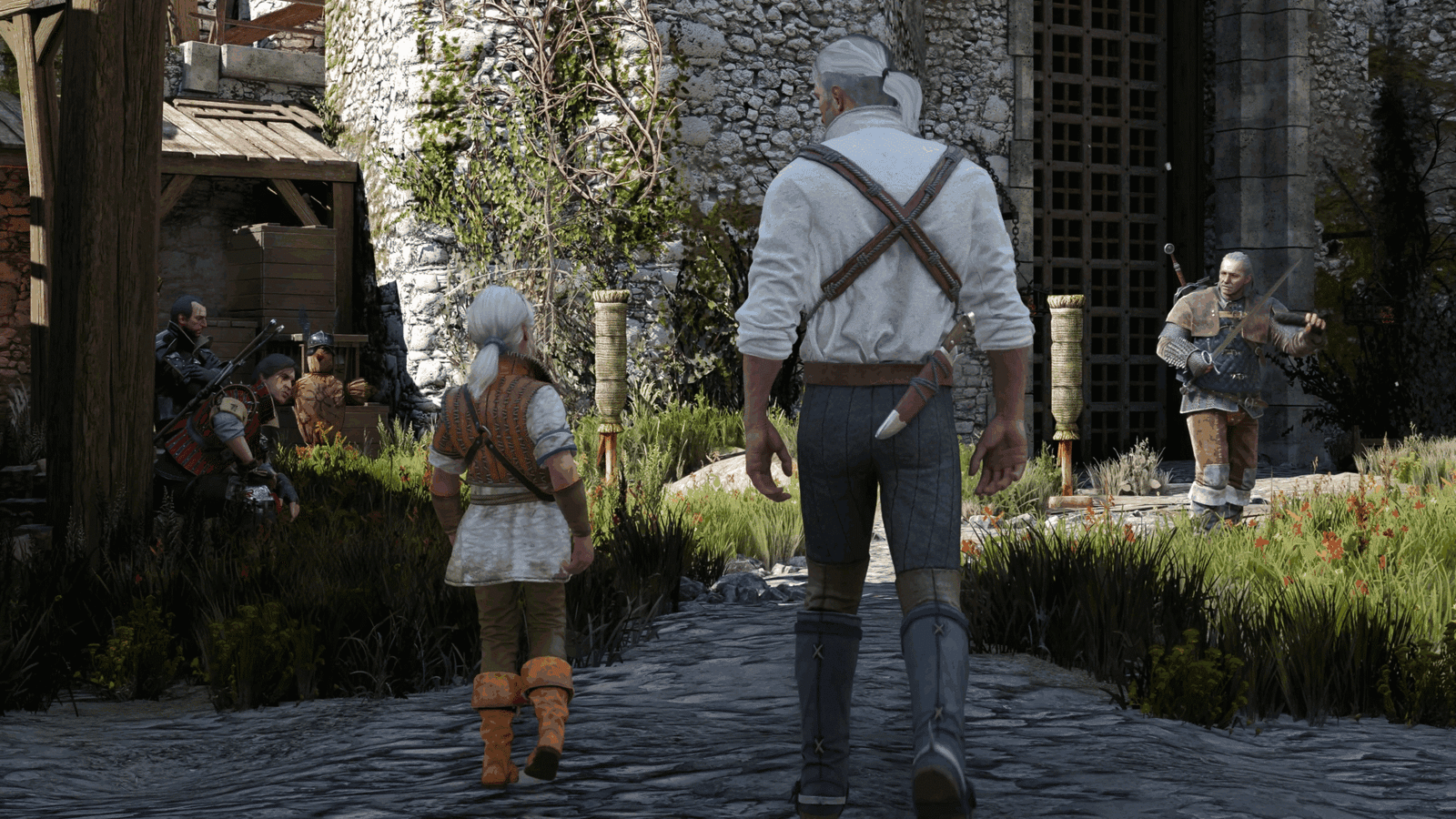
The remaster is a substantial visual and quality-of-life update that is free for existing owners and positions the franchise for the next generation and upcoming paid expansion. For new players it’s the best entry point to Geralt’s story; for returning players the upgrade is compelling largely for the graphical enhancements, the dynamic camera and the redesigned skill tree, plus mods, transmog and accessibility additions.
That said, this is a remaster, not a remake. The mission structure is unchanged and many core combat and movement issues remain from the original. If those systems are central to what you expect from an update, the experience will feel familiar. If you want the world refreshed with modern lighting, camera improvements and expanded options for customization and accessibility, revisiting Velen is worthwhile — especially at no extra cost for existing owners.