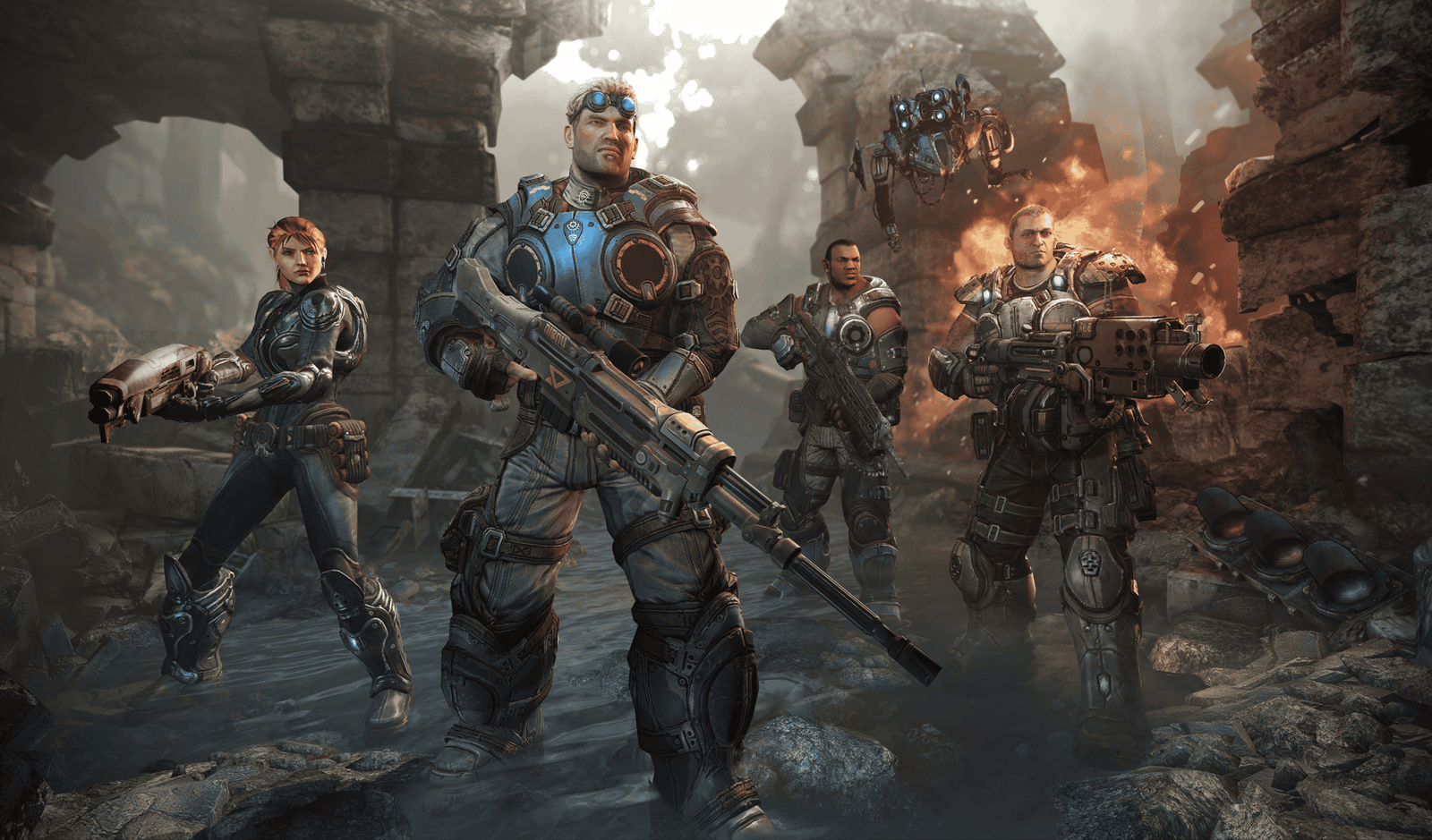
The following ranking lists the main entries in the Gears of War franchise based on critical reception, using review aggregators such as Metacritic. Scores reflect specialist reviews and do not necessarily represent individual player preferences.
Top-rated Gears of War titles by critics
Gears of War (2006) – Score: 94
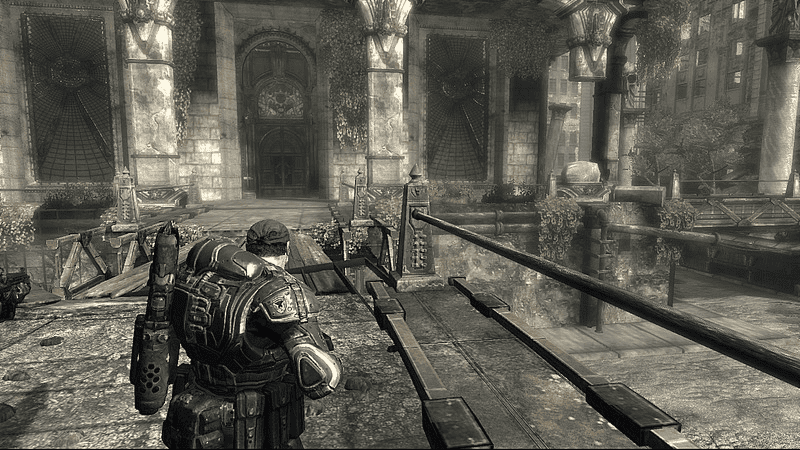
The original Gears of War, released for Xbox 360 in 2006, is credited with redefining third-person shooters through its cover-based mechanics, cinematic storytelling and dense world-building. Critics highlighted its technical innovation, atmosphere and the emotional impact of its campaign.
For many reviewers, the 2006 release remains the franchise benchmark and an essential experience for understanding why the series became influential.
Gears of War 2 (2008) – Score: 93
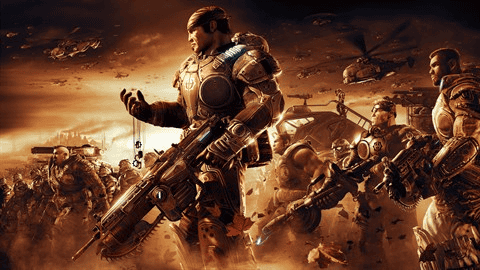
Gears of War 2 expanded the scale of the series with longer campaigns, more varied enemies and larger set-piece battles. Critics praised the introduction of new weapons and strategic combat elements that increased tactical depth across missions.
The sequel solidified the franchise’s reputation for intense action and is widely regarded as a defining entry in the series.
Gears of War 3 (2011) – Score: 91
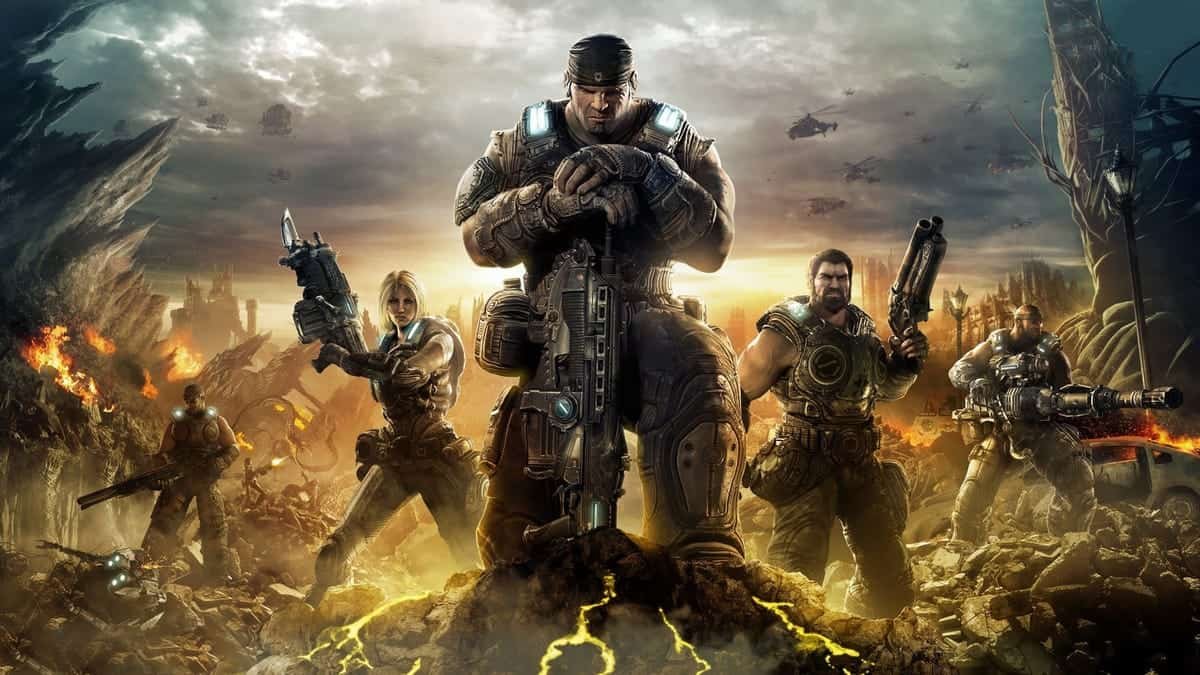
As the conclusion of the original trilogy, Gears of War 3 received acclaim for delivering an epic finale, emotionally charged confrontations and strengthened cooperative multiplayer. Reviewers noted the title’s peak in graphical fidelity and level design for its time.
Critics considered it a must-play for fans and a reference point for the third-person shooter genre.
Gears of War: Ultimate Edition (2015) – Score: 82
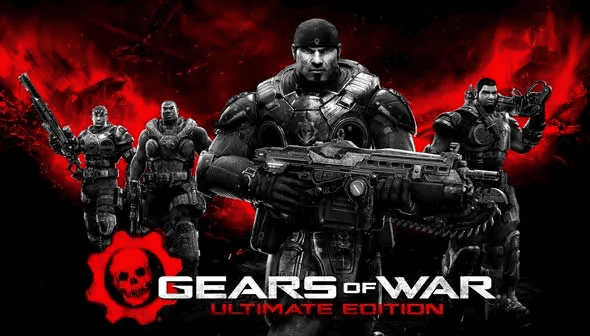
The Ultimate Edition remastered the first game for modern consoles, offering enhanced visuals and revised multiplayer modes. Critics acknowledged that while the gameplay had aged well, aspects such as story pacing and repeated environments might feel dated to new players.
Reviewers generally recommended it as a strong entry point for newcomers wanting to experience the series’ origin with updated presentation.
Gears 5 (2019) – Score: 84

Gears 5 continued the narrative from Gears of War 4 with a deeper focus on Kait Diaz’s personal journey. Critics praised the game’s refined combat, graphical improvements and the diversity of multiplayer modes, calling it one of the franchise’s most complete offerings.
Its balance of action and character-driven storytelling earned consistent positive reviews.
Gears of War 4 (2016) – Score: 84
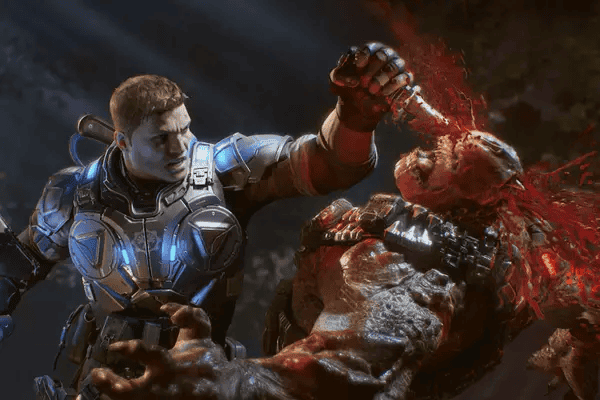
Gears of War 4 launched a new trilogy within the same universe, introducing JD Fenix as the protagonist. Reviews emphasized the title’s impressive visuals, weapon design and fluid combat, while noting that its emotional impact did not always match that of the original trilogy.
Critics viewed it as a solid entry suitable for both new players and long-time fans exploring the franchise’s legacy.
Gears Tactics (2020) – Score: 80
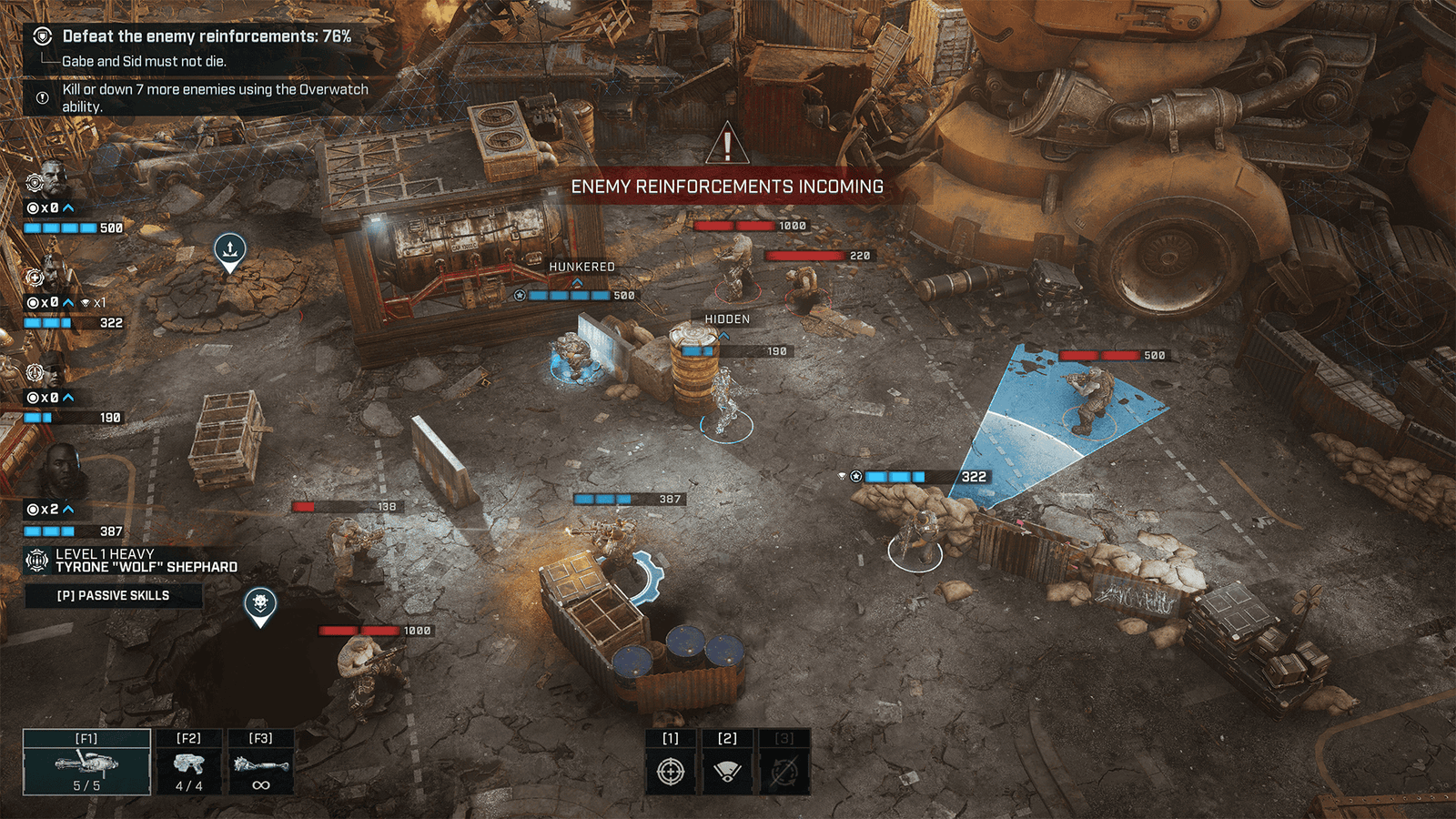
Departing from the series’ shooter roots, Gears Tactics adopted a turn-based strategy format. Critics commended its tactical depth, mission design and faithful adaptation of the Gears universe to a different genre.
The game was recommended for strategy enthusiasts but was not seen as a substitute for the adrenaline of the classic shooters.
Gears of War: Judgment (2013) – Score: 79
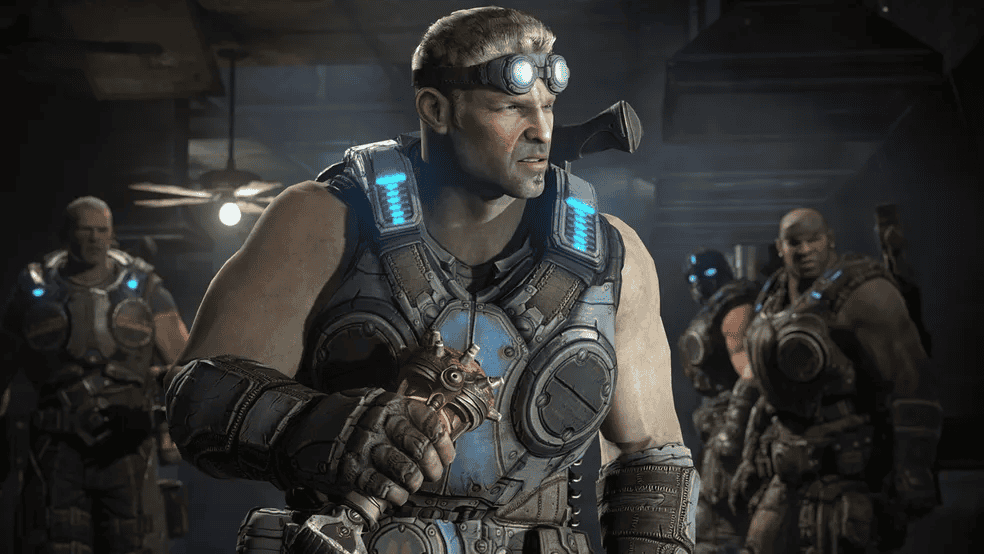
Judgment explores events preceding the first game from the viewpoints of Damon Baird and Augustus Cole. The title introduced mechanics such as a challenge system and survival missions, but critics felt its narrative did not match the dramatic strength of the mainline entries.
Reviewers described it as an interesting spin-off that ultimately fell short of capturing the core essence that made the series famous.
Gears of War: Reloaded (2025) – Score: 79

Gears of War: Reloaded aimed to update the original with modern graphics and performance improvements. While nostalgia was a selling point, critics noted the release lacked substantial gameplay innovations compared to the 2006 classic, resulting in a tepid reception.
The release is positioned as an option for fans wanting to revisit Sera with contemporary visuals; it also marks the franchise’s first appearance on PlayStation 5.
How the ranking was compiled
This list ranks major franchise releases based on aggregated critic scores. It includes mainline games, remasters and notable spin-offs. The ordering reflects reported review ratings and critical commentary rather than sales figures or player polls.
Takeaways for new and returning players
Critics consistently recommend starting with the original 2006 game to understand the series’ foundations, followed by Gears of War 2 and 3 to complete the original narrative arc. For players seeking innovation in format, Gears 5 and Gears Tactics demonstrate how the franchise expanded beyond its initial template while retaining core elements.
All titles listed above are presented with the critic scores specified and contextual summaries of their reception.