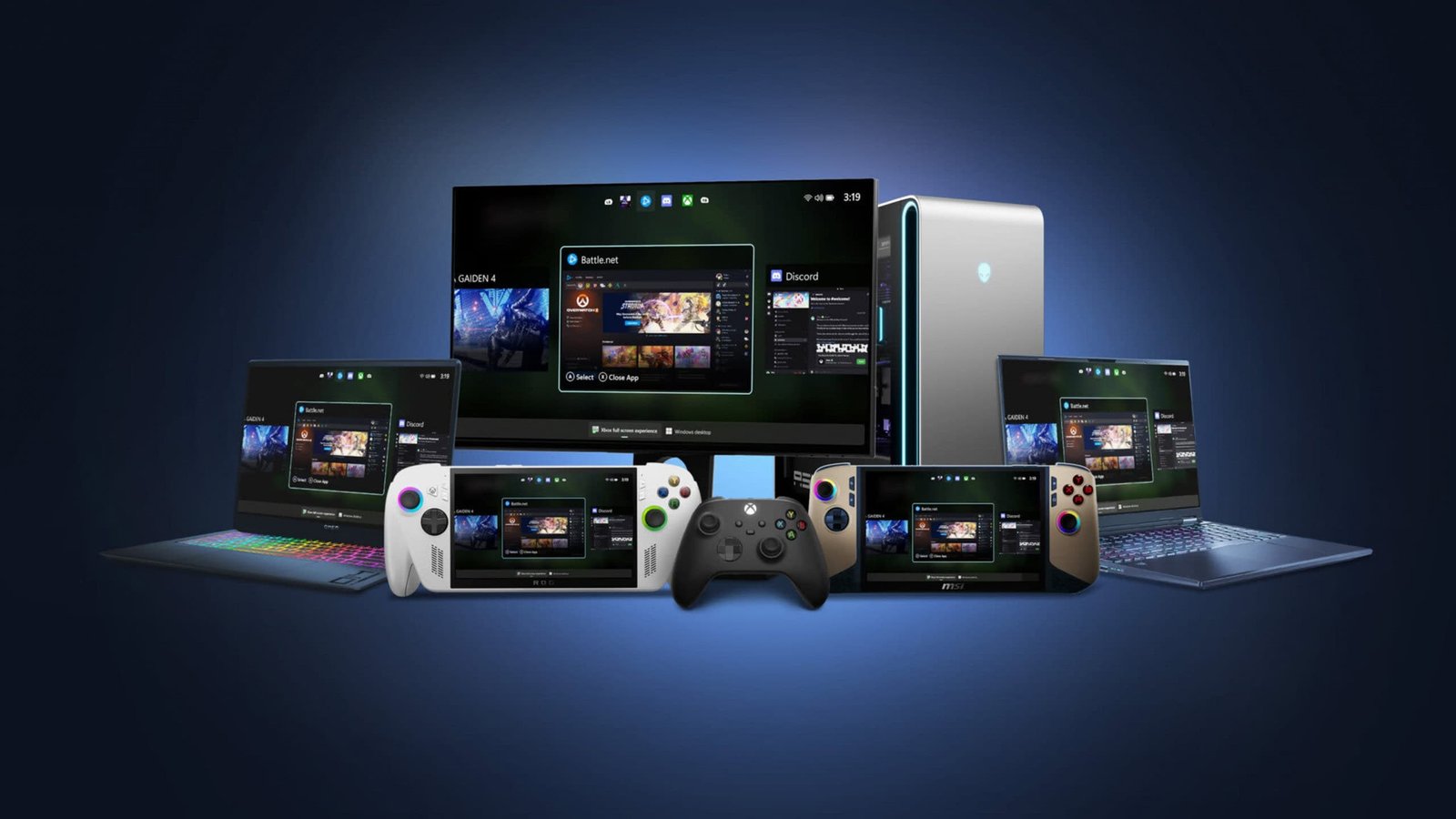
Microsoft announced at the Game Developers Conference that Xbox Mode — a full-screen interface for Windows 11 designed for controller use — will be released for all Windows 11 devices on April 11. The feature is intended to streamline game navigation and gameplay on laptops and desktop PCs.

What Xbox Mode does
Xbox Mode offers a full-screen environment that makes it easier to browse a game library, launch titles, use the Game Bar and switch between apps using a controller. The company says the interface is optimized for players who use gamepads rather than mouse and keyboard.
Origins and similarities
The feature is not entirely new: Microsoft previously tested a full-screen mode for Windows on the ROG Ally Xbox handheld. An experimental version was also made available to Windows 11 Insiders last year, featuring a task selector to quickly move between games and other applications.
The full-screen Xbox Mode bears a strong resemblance to Steam’s Big Picture mode, suggesting Microsoft is positioning it to better compete in the PC gaming space.
Rollout and availability
Microsoft said the initial release of Xbox Mode on April 11 will be limited to selected markets. No further regions or expanded timelines were provided in the announcement.
Developer-focused announcements at GDC
At GDC, Microsoft also revealed other initiatives aimed at developers and the future of Xbox hardware:
- Advanced Shader Delivery (ASD): This system lets developers precompile shaders — the programs executed on graphics cards — so they do not need to be compiled on the fly by the end user’s system.
- ASD is intended to reduce in-game pauses and stuttering. The technology was already present on the ROG Ally Xbox and will be made available to developers through the Xbox Store.
- Xbox CEO Asha Sharma had previously confirmed that the company’s next hardware, codenamed “Project Helix,” will be capable of running both PC and console games.
- The comments about Project Helix indicate the device could be a game PC carrying the Xbox brand, reflecting a direction Microsoft has been signaling for some time.