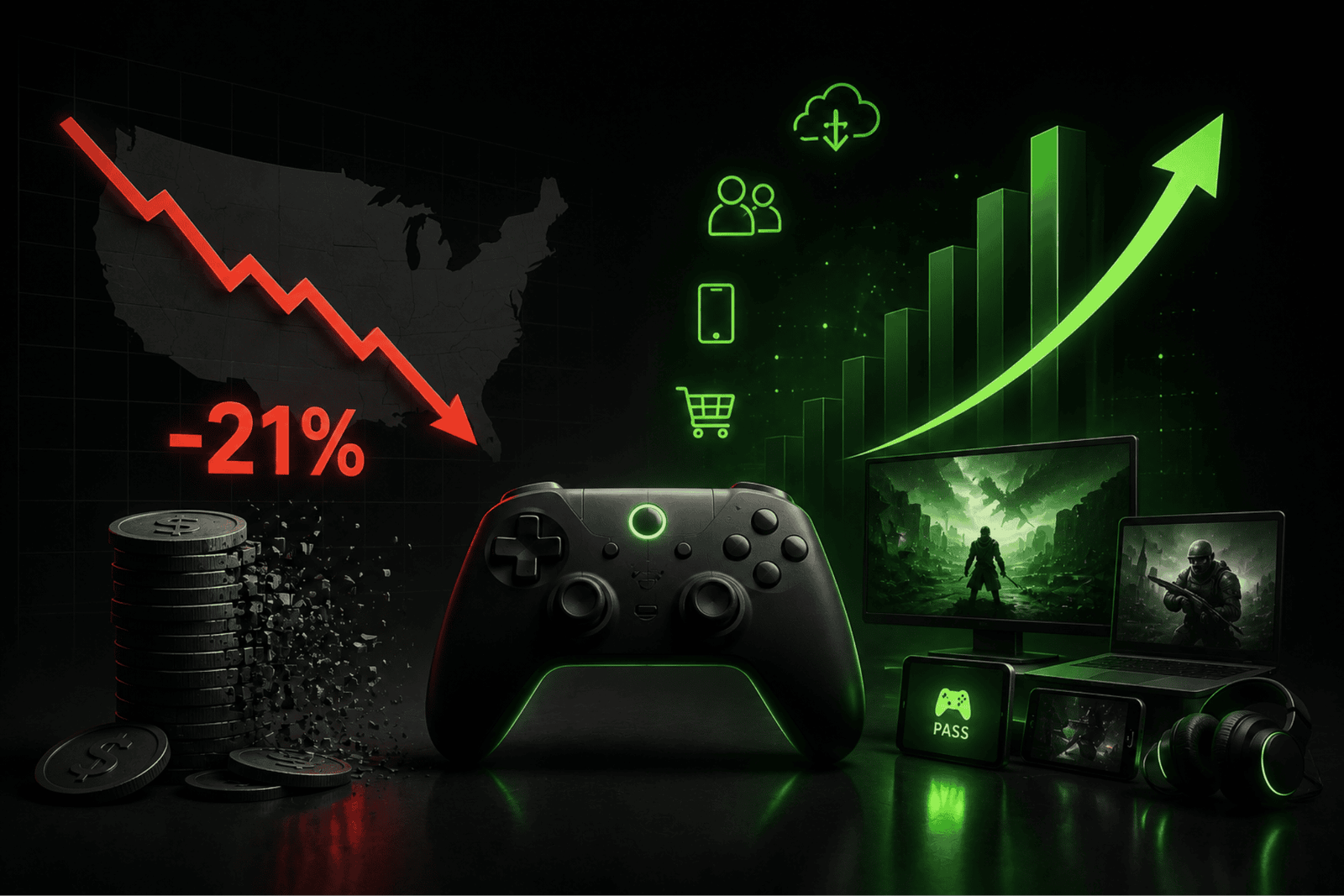
U.S. consumer spending on video games, consoles and accessories totaled $4.49 billion in June 2026, a 21% decline from $5.69 billion in June 2025, according to market research firm Circana. The report attributes the drop mainly to the comparison with June 2025, when the Nintendo Switch 2 launch produced an unusually large spike in hardware sales.
Hardware collapse drives month‑over‑month decline
Hardware was the largest contributor to the June downturn. Circana reports consumers spent just $383 million on consoles in June 2026, a 62% decrease year‑over‑year.
Content — defined by Circana as games, DLC, microtransactions and subscription services — fell 12% to $3.88 billion. Accessories also declined by 21%, totaling roughly $232 million.
Subscriptions buck the trend
Subscriptions were the only category to grow in June, increasing by 7%. Circana did not break out absolute dollar amounts by platform, but noted the gain reinforces major publishers’ focus on recurring revenue from services such as Xbox Game Pass, PlayStation Plus and Nintendo Switch Online.
Xbox posts console sales gains amid broader slump
Despite the steep drop in hardware spending overall, Xbox was the sole console manufacturer to record year‑over‑year sales growth in June. Circana says Xbox sales more than doubled compared with June 2025.
By contrast, the Nintendo Switch 2 saw sales decline 79% relative to its launch month, while the PlayStation 5 experienced a 19% decrease.
EA Sports UFC 6 tops monthly game chart

EA Sports UFC 6 was the best‑selling game in the United States for June. Circana listed the title as the monthly leader but did not publish absolute sales figures. The result comes as Electronic Arts awaits completion of a pending acquisition process.
Year‑to‑date figures show market essentially flat
While June’s comparison looks sharp, the cumulative market through the first half of 2026 presents a different picture. From January through June, U.S. spending on video games reached $27.5 billion, just 1% below the same period in 2025.
Circana’s analysis indicates the pronounced June decline is driven more by the exceptional hardware performance tied to the Switch 2 launch last year than by a structural industry slowdown.