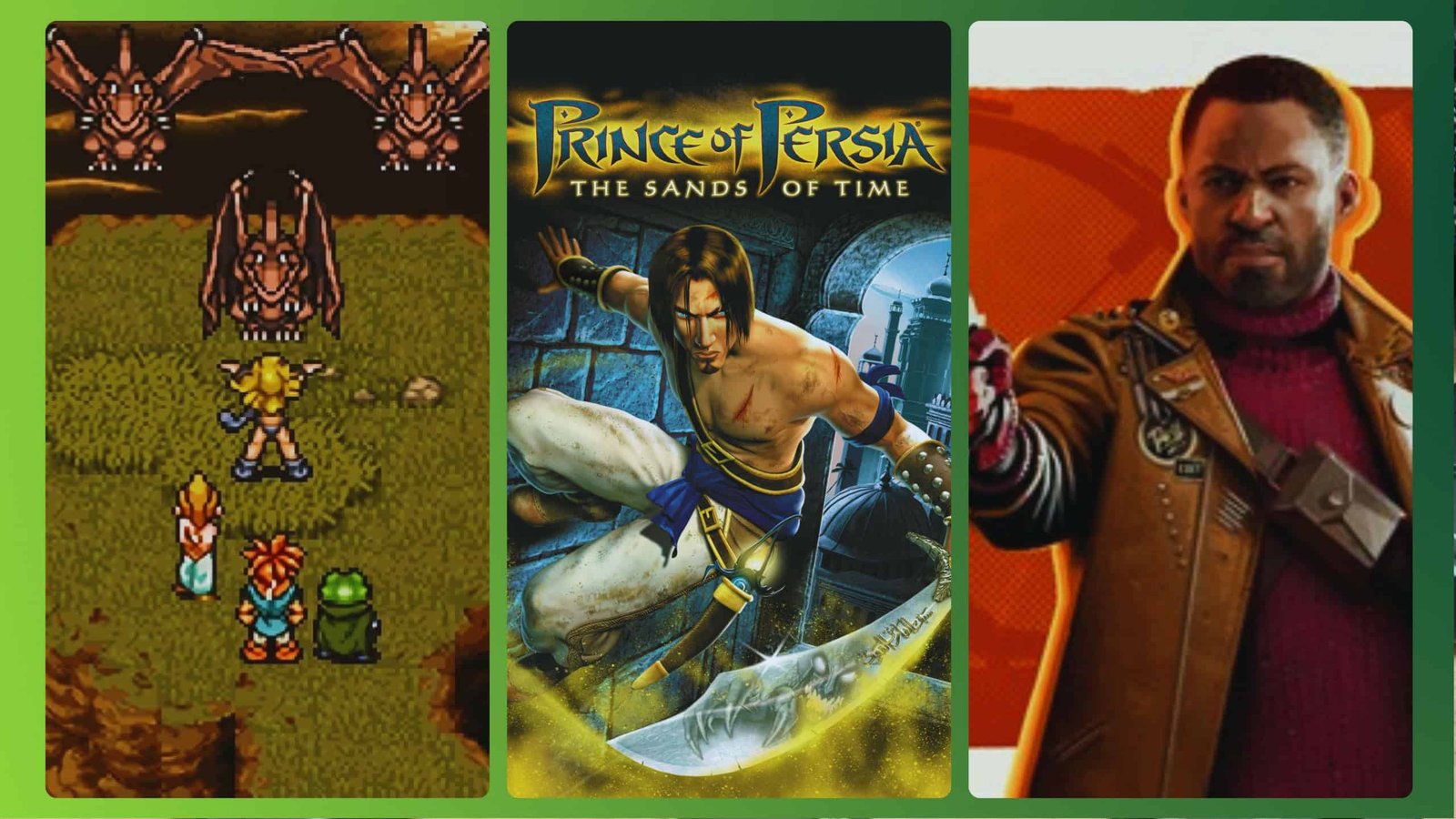
Time travel appears across genres in games, serving both story and mechanics. This roundup presents seven titles where temporal manipulation shapes puzzles, combat and narrative stakes.
Chrono Trigger — an era-spanning RPG
Chrono Trigger places the player in control of Crono and his companions as they travel through periods ranging from prehistory to the end of time to stop a cosmic threat. Released by Square Soft, the game was created by a “dream team” including Hironobu Sakaguchi, Yuji Horii and character designs by Akira Toriyama.
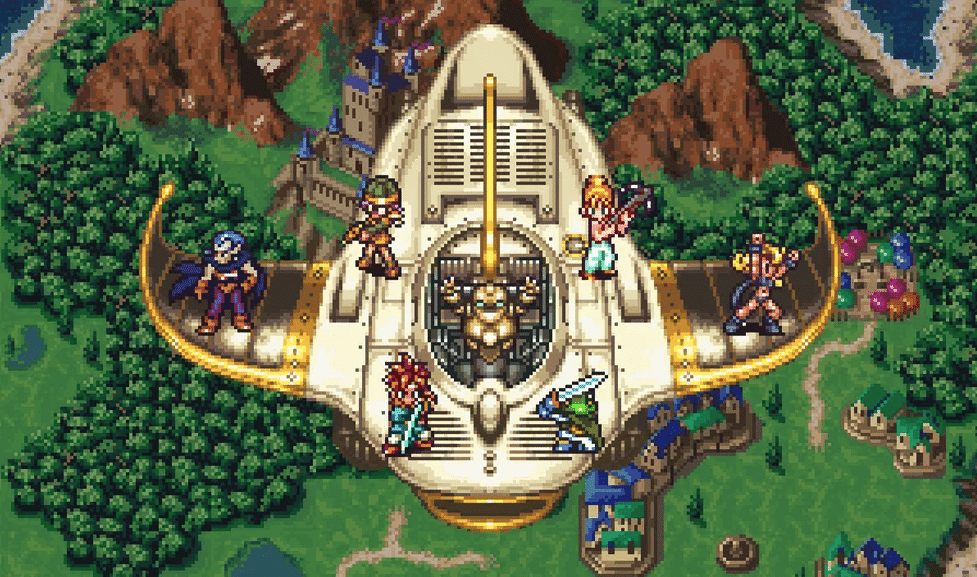
With multiple endings and a combat system that was innovative for its era, Chrono Trigger remains influential and continues to attract new players.
Braid — rewinding time to solve platforming puzzles
Braid reimagined platformers by granting the protagonist, Tim, the ability to manipulate time to correct mistakes and overcome inventive puzzles. The game frames Tim’s quest to rescue a princess — and possibly to atone for a past error — in an ambiguous, melancholic narrative.
Beyond its time-reversal mechanic, Braid drew attention for its art style and soundtrack, using rebinding as both gameplay and storytelling device.
Prince of Persia: The Sands of Time — the rewind mechanic
In The Sands of Time, the Prince is deceived into releasing the Sands of Time, which transform the palace inhabitants into monsters. With the help of Princess Farah and the mystical Dagger of Time, the Prince must undo the catastrophe.

The game introduced a signature mechanic that lets players rewind recent actions to fix combat mistakes or solve puzzles, blending acrobatics, action and environmental challenges.
Dishonored 2 — a mission built around past and present
Although time travel is not central to Dishonored 2, the mission “A Crack in the Slab” centers on a device called the Timepiece that lets the player switch between a mansion’s past and present. This temporal alternation is key for puzzle-solving, stealth approaches and manipulating the environment.
The level demonstrates how time-based mechanics can be integrated into stealth-action design to create memorable gameplay moments.
The Legend of Zelda: Ocarina of Time — childhood and adulthood
Ocarina of Time follows Link’s quest to save Hyrule, with a core mechanic allowing transitions between his childhood and adulthood. The Ocarina itself enables temporal shifts that are essential to exploration, puzzle-solving and confronting Ganondorf.
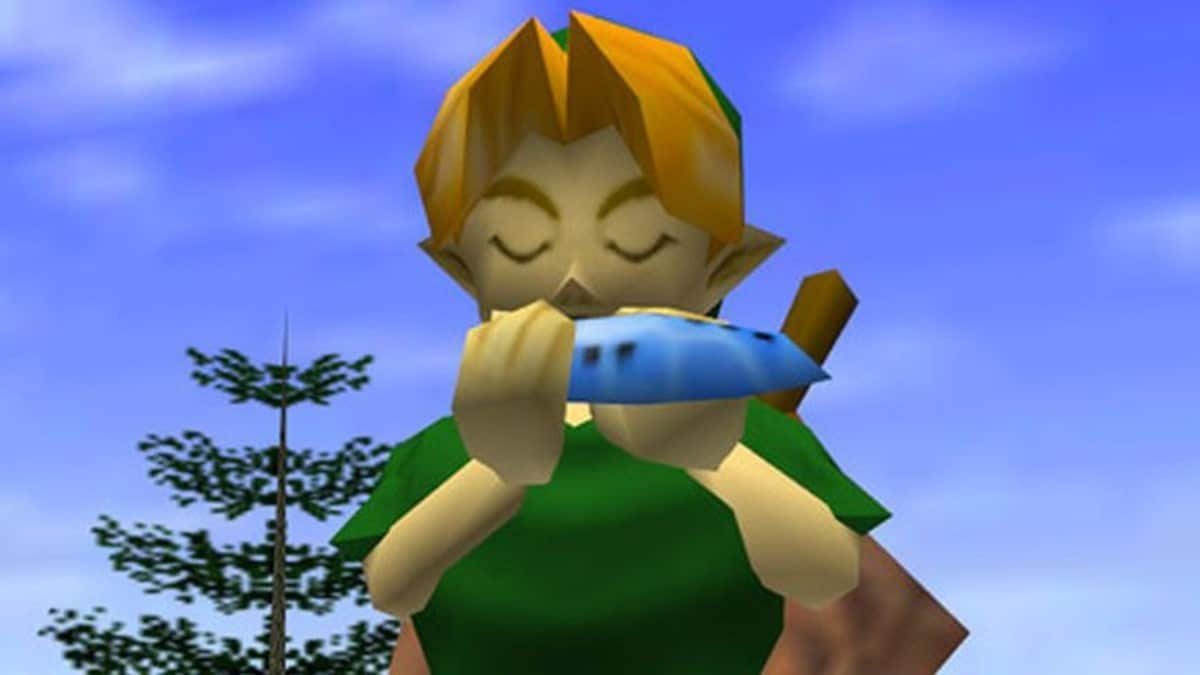
Originally released for the Nintendo 64, the title influenced world design and narrative in subsequent games.
Life is Strange — rewinding choices and consequences
Life is Strange puts players in the role of Max Caulfield, a photography student who discovers she can rewind time. The ability to reverse decisions lets players immediately alter choices while keeping items and knowledge gained before the reversal.
Set in the fictional Arcadia Bay, Oregon, the story examines friendship, grief, bullying and mental health. Each decision can trigger ripple effects, echoing butterfly-effect narratives, while gameplay mixes exploration, puzzles and dialogue-driven choices.
Deathloop — breaking a repeating day
Deathloop traps the player in a time loop where the same day repeats until the eight key targets are eliminated before the day restarts. Each run offers new routes, strategies and interactions that help the player progress toward escape.
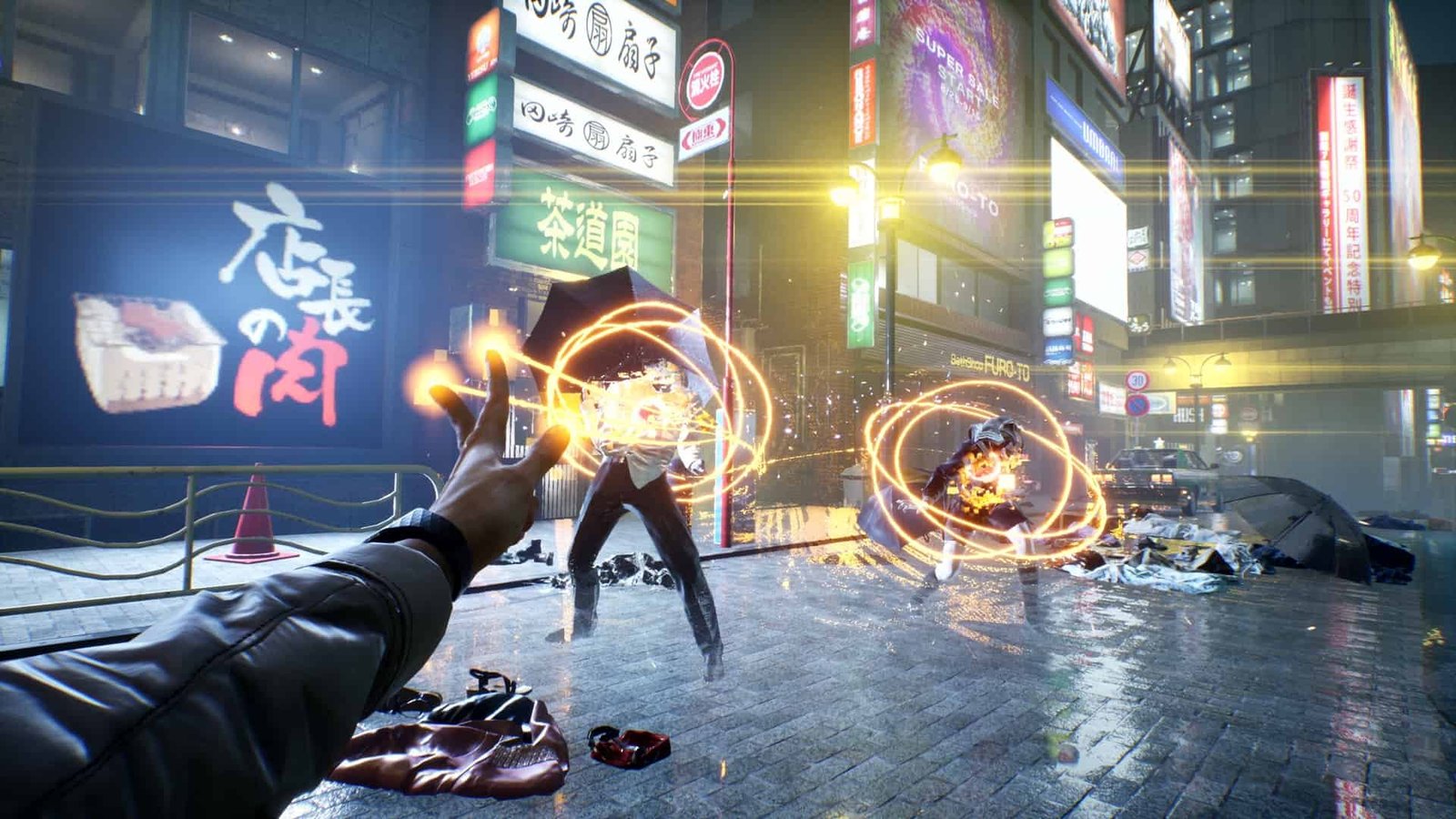
Combining first-person action with mystery, Deathloop builds a trial-and-error structure around its temporal premise.