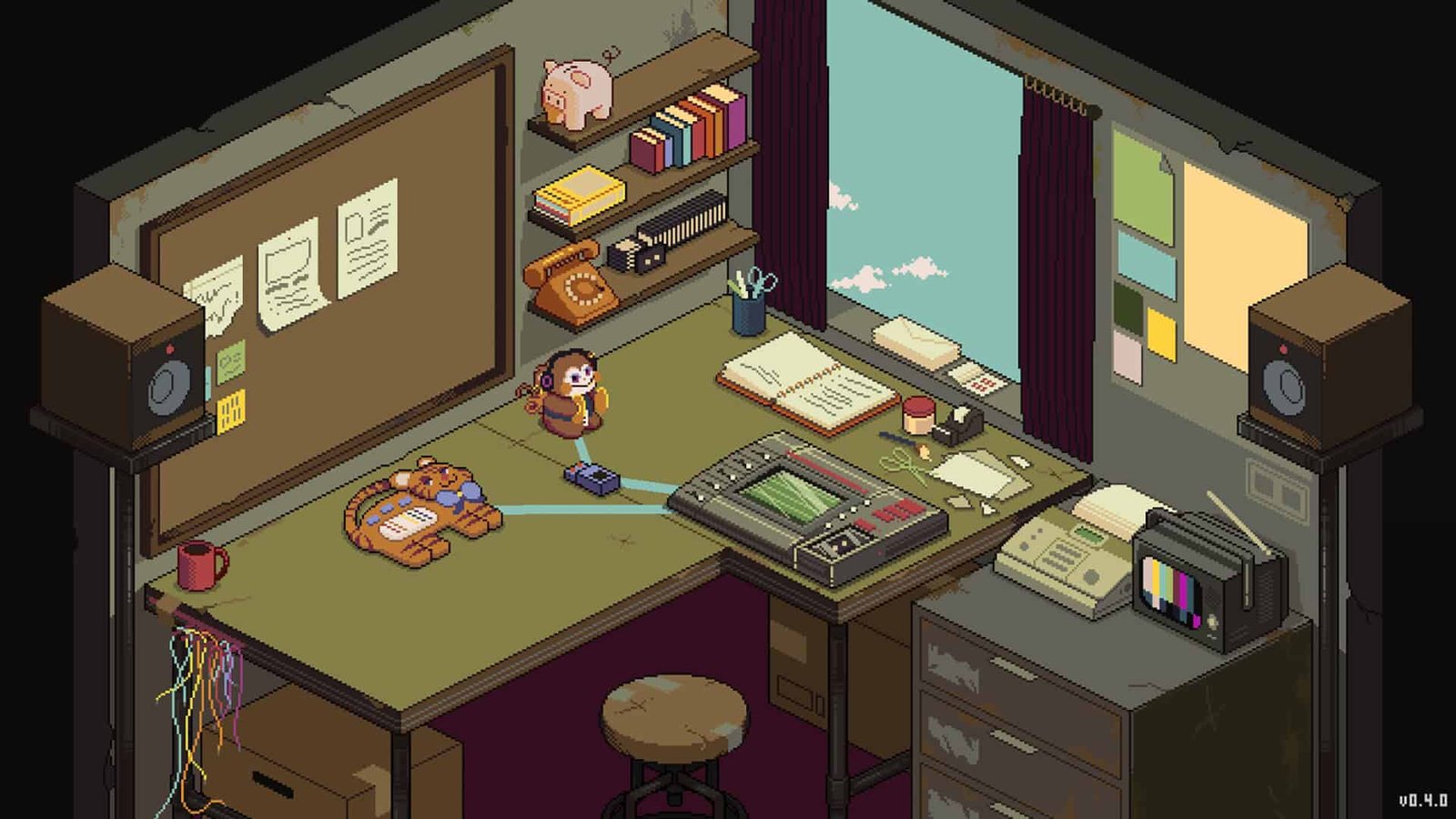
OFFBEAT drops players into 1980, starting with a four-track synthesizer and the task of building a commercial home studio that doubles as a real audio production tool. The game combines tycoon mechanics—taking and fulfilling client commissions—with a functional sequencer that exports finished tracks as WAV files. The publisher even created a label, Pantaloon Records, to release player-made songs.
How gameplay and the sequencer work
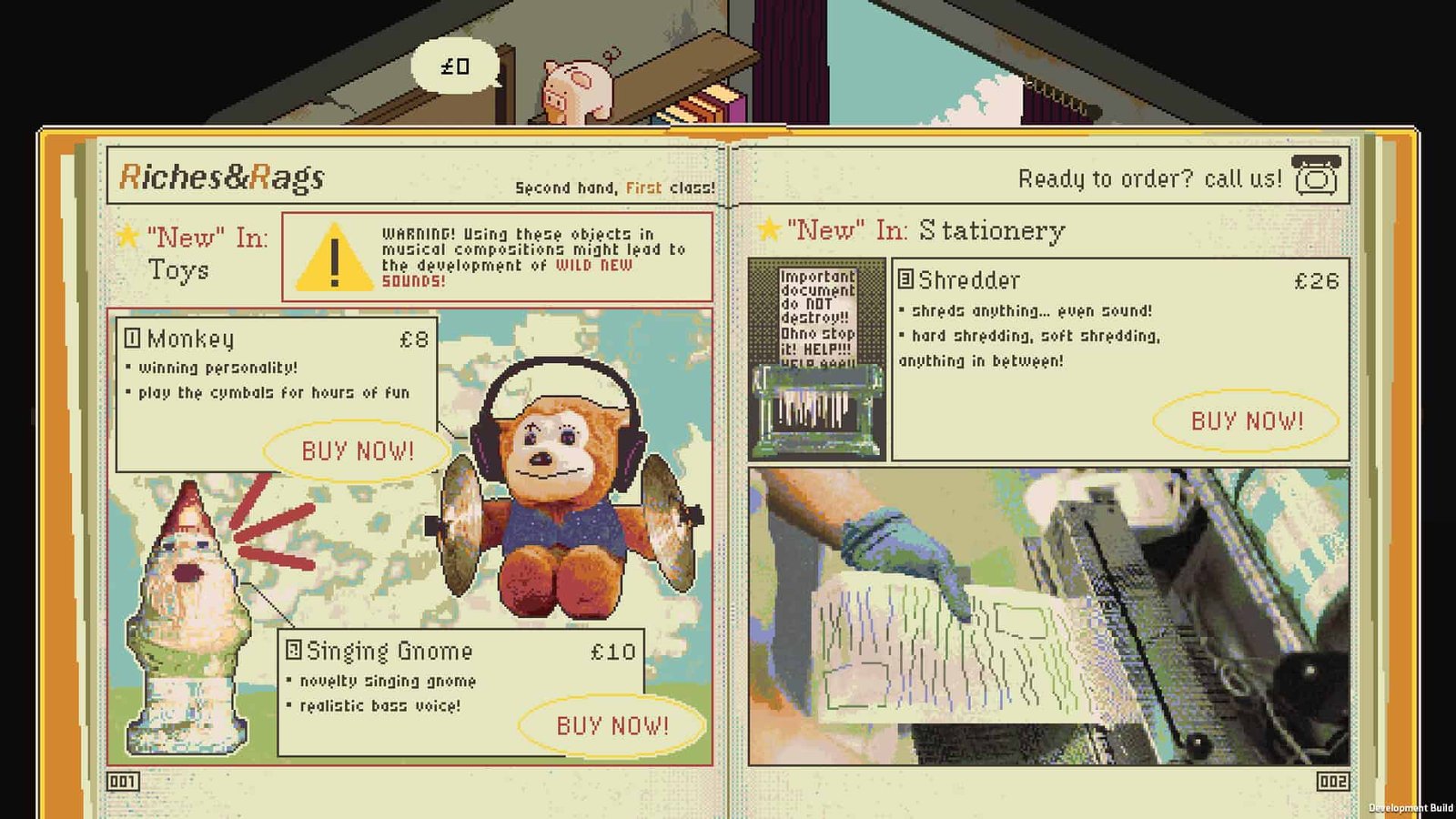
Gameplay cycles between accepting commissions, composing to meet clients’ brief, delivering tracks and reinvesting earnings in studio upgrades. Requests range from a “ghost wedding” soundtrack to “cavern techno.” Each brief is translated into colored tags that appear in the interface; those tags light up as your track approaches the requested attributes, providing real-time feedback.
Composition happens on a grid: clicking places notes with visible pitch and octave. Tweaks to instrument parameters while the song plays are recorded into the track, and loops and variations help shape arrangements. An optional beginner mode restricts available notes to a single key, lowering the barrier for players without musical training. There are no failure states; you can redo commissions indefinitely without penalty, encouraging experimentation.
Instruments, upgrades and musical constraints
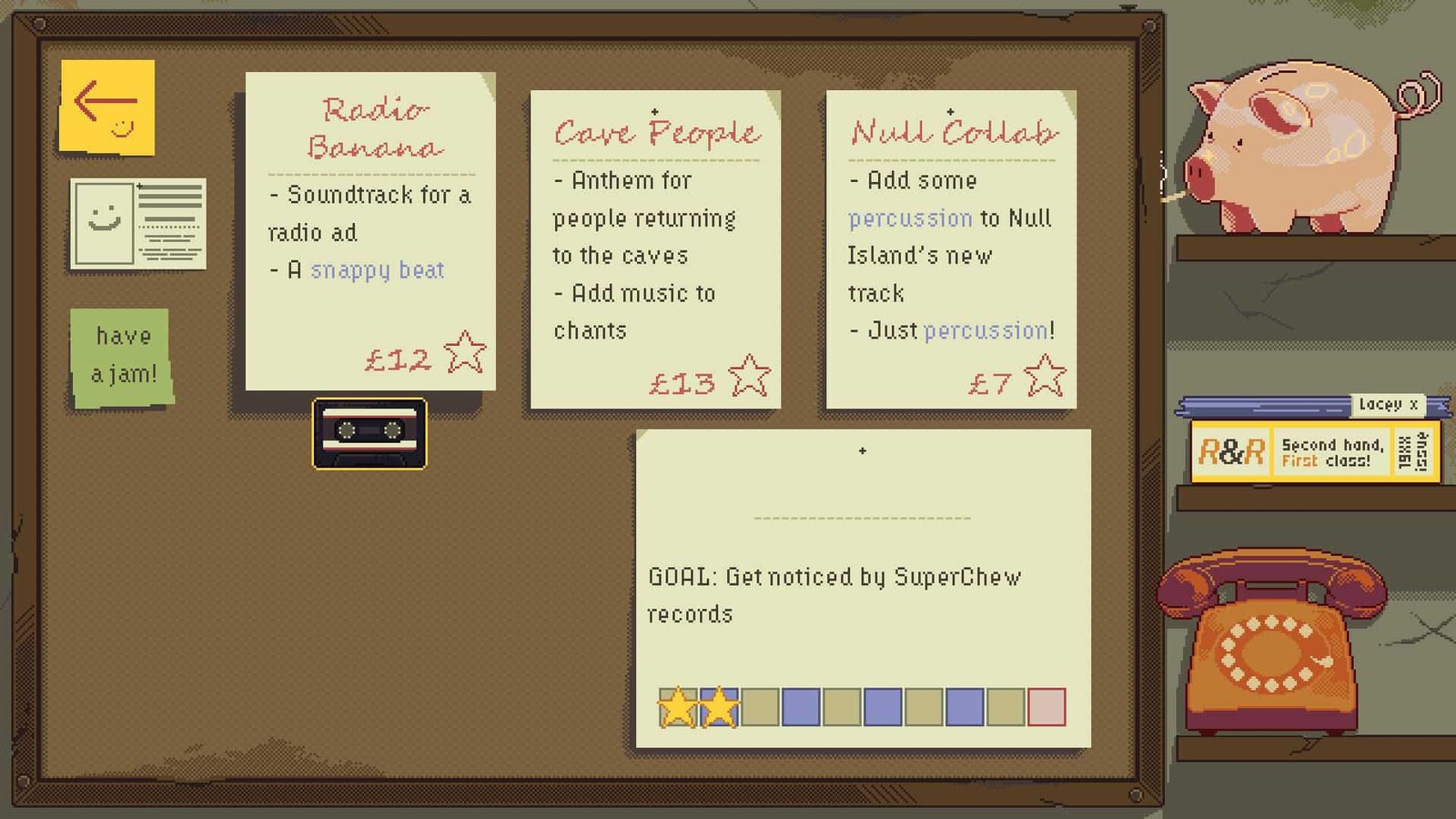
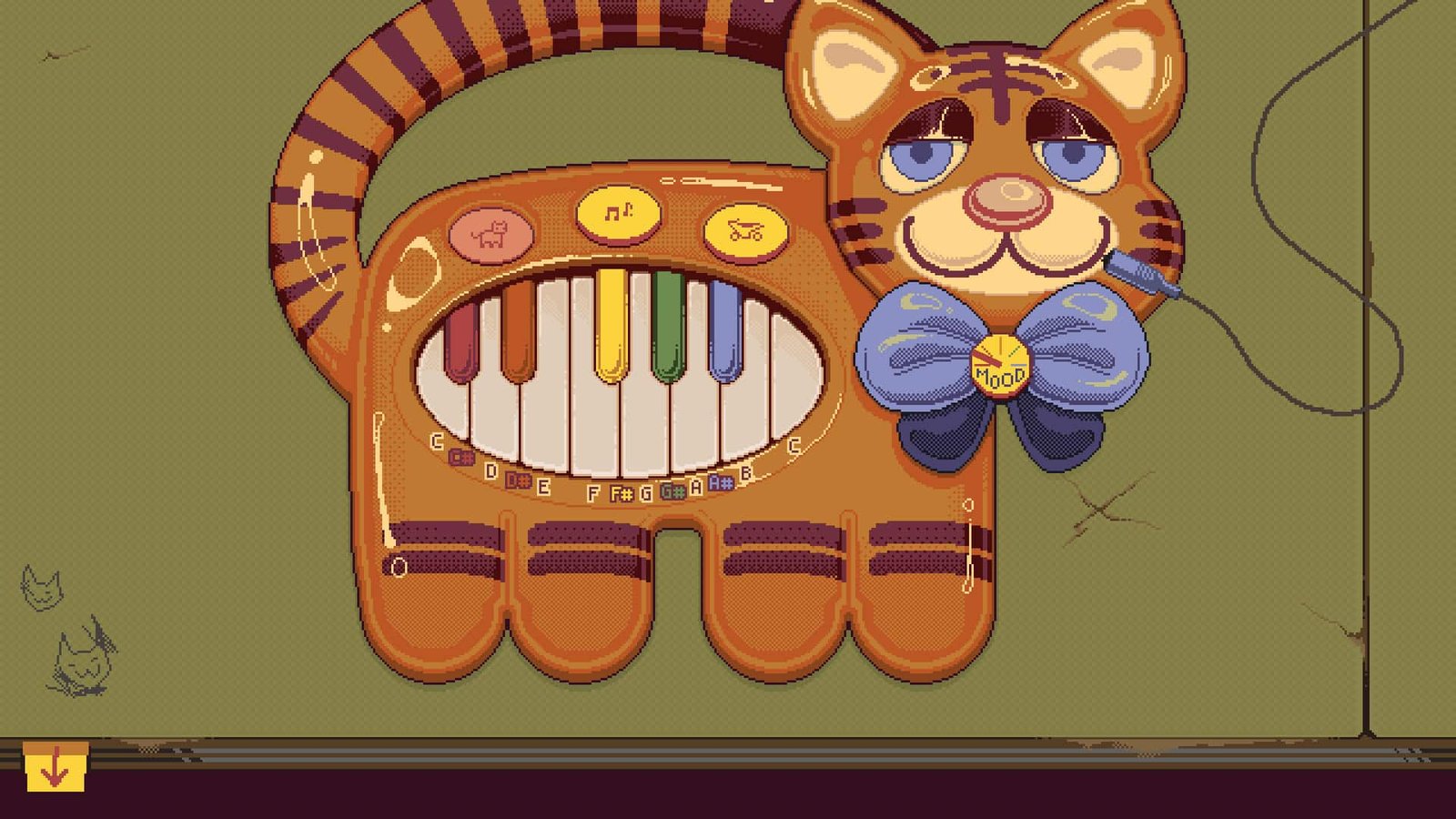
Instruments are eccentric and characterful—examples include a singing garden gnome, a paper shredder, a cymbal-hitting monkey, the Tiger-01 cat keyboard and an extremely small violin. These items are purchased from a second-hand catalog called Riches & Rags and can be upgraded or modified through Electric Lacey. Each instrument has a limited range, which forces players to plan which sources supply bass, rhythm and melody as the studio’s inventory expands.
New scales (such as the Dorian mode) and effects like reverb and equalization unlock alongside lessons in the studio notebook. An Effect Bus allows chaining effects across sources, bringing the toolset closer to what you find in professional DAWs. Players familiar with FL Studio or Ableton will recognize the workflow; newcomers learn many concepts through hands-on use.
Editing and management shortcomings
The editing experience has friction: there is no undo button, so a misplaced note must be deleted manually. Copy-and-paste is cumbersome, navigation between song sections can be confusing, and you cannot save presets or reopen a delivered track for revisions. The lack of time signature options and a metronome is a drawback for users who want to work outside common 4/4 patterns.
Some higher-level commissions present vague objectives, and certain tasks depend on mechanics the game does not clearly explain. Repeating many commissions back-to-back becomes tiring—OFFBEAT demands concentration and is not suited to passive, autopilot play. Studio management is relatively shallow: after a certain point money accumulates and upgrades have diminishing returns.
Story structure and available content
The narrative is arranged in chapters themed around electronic music styles, but story elements serve mostly as backdrop. Clients are unnamed on-screen but show distinct personalities through witty dialogue. However, only two chapters are available in early access, and the plot ends just as it begins to gain momentum. Current content offers slightly more than ten hours of structured play; a sandbox free mode extends playtime for those focused on composition.
Technical performance, visuals and audio
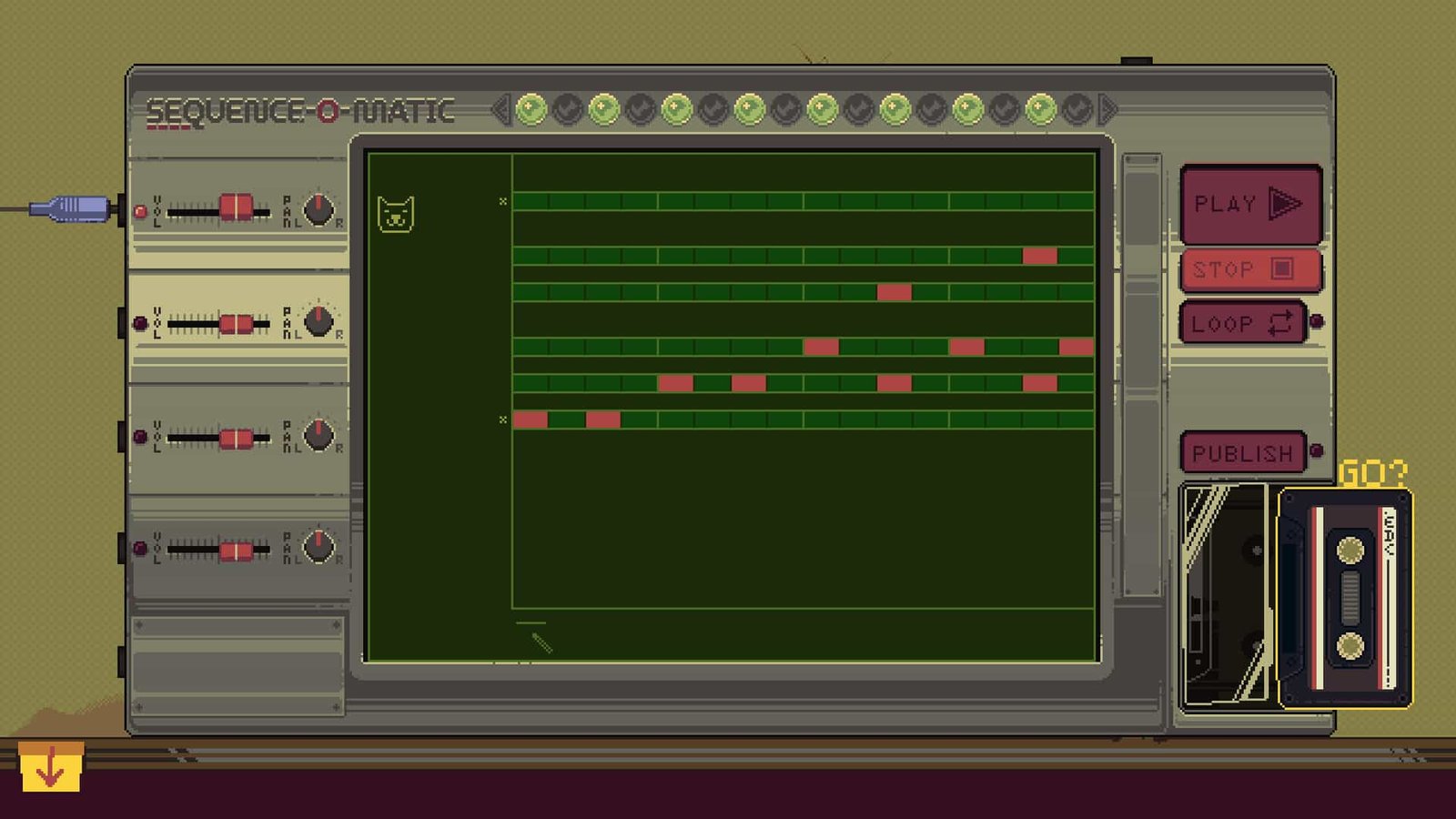
OFFBEAT’s pixel art evokes a cozy home-studio vibe, with detailed instruments and a nostalgic interface. System requirements are modest, but the UI is not well optimized for small screens like the Steam Deck; the game is mouse-driven and relies on the Deck’s trackpad when played there.
Stability is a significant concern. Reported issues include total save loss, a bug that halts story progression after purchasing all upgrades, audible crackling and desynchronized tracks—even in exported WAVs. External audio interfaces can behave inconsistently, and progress from the demo does not always carry over to the full version. The game is available only in English, which is notable given the textual and theoretical content.
Planned updates and missing features
Developers plan a 6–8 month early access period with monthly updates and a 1.0 release targeted for early 2027. A September update added the violin, reverb, equalizer, the Effect Bus and 11 new commissions—indicating steady development from the three-person studio. MIDI keyboard support is under consideration, and community requests prioritize an undo shortcut, time signatures and a metronome. Price will increase at full launch, so early access is currently the cheaper option if players accept existing bugs and limited content.
Verdict
OFFBEAT occupies a narrow niche: it is not for players seeking deep management systems, lengthy narrative arcs or localization beyond English. But it succeeds as an accessible introduction to music production for those intimidated by full DAWs. The game teaches composition through play and exports usable WAV files, and community reception reflects that: over 500 reviews with nearly 98% positive rating, classifying it as “Very Positive” on Steam despite bugs and content limitations. If the developers maintain their update cadence, OFFBEAT could become a reference for its genre.
Pros
- Practical, hands-on teaching of music production
- Creative, humorous instruments
- Clear feedback on commissions without punishment
- WAV export for free use of created tracks
- Low price and active studio updates
Cons
- Very specific target audience
- Limited content in early access
- Editing lacks undo and has friction
- Reports of save and audio bugs
- Only available in English
Technical sheet
- Name: OFFBEAT
- Developer: Whetstone Games
- Publisher: Pantaloon Interactive
- Genre: simulation, musical tycoon, audio production
- Release date: July 22, 2026 (Early Access)
- Early Access length (expected): 6 to 8 months
- Platforms: PC (Steam), Steam Deck compatibility listed as “Playable”
- Price: R$ 43,99 / US$ 11,99
- DLCs: Nice Cup of Tea and Producer’s Handbook (R$ 11,99 each)
- Modes: single-player
- Languages: English (interface and subtitles)
- Controls: mouse (no full controller support)
- Export: WAV tracks for unrestricted use
- Steam achievements: 26
- Steam features: Steam Cloud and Family Sharing
- Demo: available
- Minimum requirements: Windows 10, Core i5 2.2 GHz, 4 GB RAM, DX10-capable GPU, 1 GB disk space, sound card (headphones or speakers recommended)